How Can Your Professional Services Team Get Better at Selling to Senior Executives?
Last updated on September 7th, 2026 |

Learn how professional services firms can get better at selling to senior executives by building strategic relationships with decision makers, influencers, advocates, and partners.
*******
Every professional services firm I advise is looking for growth, whether it’s organic growth or via acquisition.
Selling to senior executives is an important capability to achieve that growth, and it can also be one of the most challenging to develop. It requires mastering a combination of high-level skills used in specific business development scenarios.
Most senior executives have at least 50% of their calendar booked up on a weekly basis, and I know I’m conservative with that figure. Add in competing priorities of equal magnitude and the potential for decision fatigue that comes with those priorities.
When I work with professional services firms on growth strategy and business development, I encourage them to think more broadly about executive access. Earning attention requires developing the right relationships and the ability to create value over time.
The Four Strategic Relationships Amy Franko Recommends Firms Identify and Maintain
Amy Franko recommends that firms focus on four types of strategic relationships to help firms achieve their growth goals.
- Decision Makers. These are the individuals or buying groups that have a direct “yes” or “no” over a buying decision. Think of these as the “buying authority” in an opportunity or within the client as a whole.
- Influencers. These are the individuals or groups whose opinions matter to those decision makers. Think of these as the “buying influence” with the ear of the buying authority.
- Advocates. These are the individuals or groups who are willing to share information and open doors on behalf of your professionals and your firm. They may or may not be senior executives, but their presence and actions matter. In every client, it’s important to have at least two to three advocates to protect against competition and relationship erosion.
- Strategic Partners. These are the individuals or groups that can mutually beneficial information, introductions, and revenue-generating opportunities. The most impactful strategic partners aren’t vying for the same budget dollars as your firm and they sell non-competitive products and services.
Together, these relationships can help your professionals gain better access to senior executives, understand what matters inside a client’s organization, and build a stronger early-stage opportunity pipeline.
Who Are the Senior Decision Makers Your Firm Needs to Reach?
Because professional services firms are selling more offerings than ever before, the decision maker profile has expanded. Depending on the size and complexity of the client organization, this may be one senior executive or a group of executives. These are the people who can say yes or no to working with your firm, approve an initiative, allocate budget, or move an opportunity forward.
When identifying decision makers, identify the intersection of these three areas: authority to buy, budget allocated or the ability to find it, and true need against other competing priorities. When there is clarity on who owns the business priorities, where your firm can create the greatest value, and who has the authority to act on those priorities, you’re in a much better position to win.
This is also where a more strategic approach to client selection and account development becomes important. As Chief Growth Officers analyze the accounts and verticals your firm wants to pursue, this provides a path to identifying the relationships worth creating and sustaining before opportunities emerge.
Who Influences Senior Executives in Client Organizations?
Selling to a senior executive rarely means selling to one person.
Professional services solutions are often complex, and with long sales cycles. That means you should expect multiple people to have influence over an opportunity.
These individuals may not have final decision-making authority, but they can shape requirements, provide internal perspective, evaluate potential solutions, and influence the executives who ultimately make the decision.
This is why professional services firms need to build relationships both wider and deeper within client and prospective client organizations. One of the biggest mistakes I see a firm make within a client’ s organization is to become too narrow with relationships and to build only those within their comfort zone.
As business development teams map an account or a vertical, below are some strategic questions to guide the discussion:
- Who will have a voice in this decision?
- Who will be most impacted by the decision, and do they have a voice?
- Who does the senior executive rely on for perspective? If a senior executive were to say: “This is a great solution, and I want to involve X in the discussion,” who would be that individual or group?
- What “left field” contributors may present themselves as the decision progresses?
- Who may gatekeep this opportunity?
Those questions can uncover people your team may not have considered as part of the buying decision process.
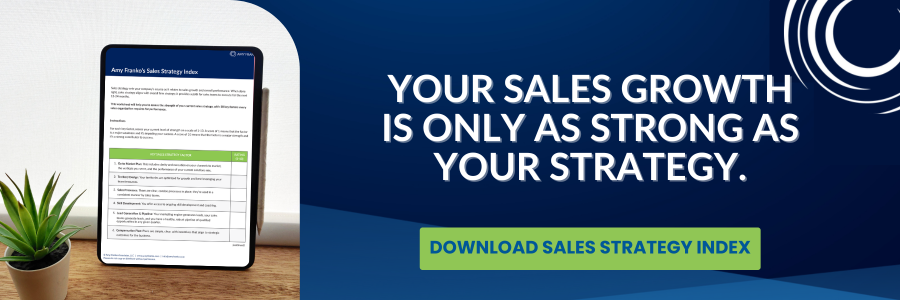
This Sales Strategy Index worksheet from Amy Franko will help you to assess the strength of your current sales strategy, with 10 key factors every sales organization requires for performance.
How Can Advocates Help Your Firm Reach Senior Executives?
One of the most valuable relationships in business development is the advocate.
An advocate may be inside the organization you want to reach, but they can also be elsewhere in your network or industry. What matters is that they know you and your capabilities, and they are willing to open a door on your behalf.
They might make an introduction, provide helpful context, or make it easier for you to begin a relationship with someone who would otherwise be difficult to reach. It’s recommended to identify and build relationships with at least two to three advocates within a priority organization, in addition to developing advocates across an industry. For firms who have organized around industries, this becomes significantly easier to accomplish.
When networks run both wide and deep, professional services firms can rely less on cold outreach. There are influential individuals and organizations who know your reputation, understand the results you create, and are willing to connect you with senior leaders.
How Can Strategic Partnerships Create Better Access to Senior Executives?
Some of the best paths to executive access may come from outside the client organization.
Strategic partners are individuals or organizations that offer something complementary to your firm’s offerings. They have their own relationships, influence, and authority within the industries your firm is targeting. These strategic partnerships can create opportunities for mutual introductions, joint thought leadership, or go-to-market activities.
For example, complementary firms might collaborate on an executive roundtable around a shared client challenge or a shared industry. When both firms create value for the executives participating, they also expand their relationships within the market. Senior executives will make time for what they value, especially if it helps them to make progress on a challenge or shortens the time required to accomplish an objective.
The key is mutually valuable reciprocity. A strong strategic partnership creates value in both directions and expands the success of everyone involved.
How Do You Build Senior Executive Relationships Before You Need Them?
Strong executive relationships take time to build. If your team begins developing relationships only after an opportunity appears, it’s too late. Your competitors are likely to have those relationships and are in the strongest position to win. This is magnified when sales cycles are over 12 months, or there are very specific buying windows for an offering.
Amy Franko has developed a simple relationship-building formula that is ideal for business development efforts within professional services firms. It can be leveraged in skill development or strategic planning where chief growth officers want to realize substantial progress. It creates stronger access, deeper relationships, and a foundation for long-term growth.
- Identify and create rapport early. Map the relationships at the industry or account levels. From there, create a simple strategy to generate meaningful points of connection and ways to bring value.
- Sustain the relationship over time. Moving from rapport to relationship takes time and can be accomplished through ongoing relevant insights, conversations, introductions, thought leadership, or other interactions that matter to that individual.
- Leverage the relationship in high-value situations. Once mutual trust and value are there, a relationship can be leveraged. That might mean requesting an introduction, gaining commitment to a next step, advancing an initiative, or exploring an opportunity.
Who can help your firm become better at selling to senior executives in client organizations?
Amy Franko works with professional services firms to strengthen their growth strategies and sales capabilities. Amy Franko can help your business development teams more effectively grow strategic relationships with senior executives and key accounts. If you’re a Chief Growth Officer ready to help your firm sell to senior executives, contact Amy to schedule a call.
Frequently Asked Questions
Professional services firms can improve executive access by intentionally building four types of strategic relationships: decision makers, influencers, advocates, and strategic partners. Together, these relationships help firms understand what matters inside client organizations, gain access to senior leaders, and build a stronger early-stage opportunity pipeline.
Focus on the intersection of three factors: authority to buy, budget allocation or the ability to find budget, and a true need that can compete successfully against other priorities. As Chief Growth Officers determine which accounts and verticals to pursue, they can use these factors to identify the relationships worth creating and sustaining before opportunities emerge.
Executive relationships should be developed before an opportunity appears. Start by identifying priority relationships and creating rapport early, then sustain those relationships through relevant insights, conversations, introductions, thought leadership, and other valuable interactions. Once mutual trust and value are established, the relationship can be leveraged in high-value situations, such as requesting an introduction, advancing an initiative, or exploring an opportunity.
 Our Strategic Selling signature sales training program is now available online. This online sales learning program is ideal for professional services and B2B sales. Get started with 2 free lessons.