Guest Article: AI, Strategy & Sales Growth: What Every Executive Needs to Know
Last updated on January 12th, 2026 |
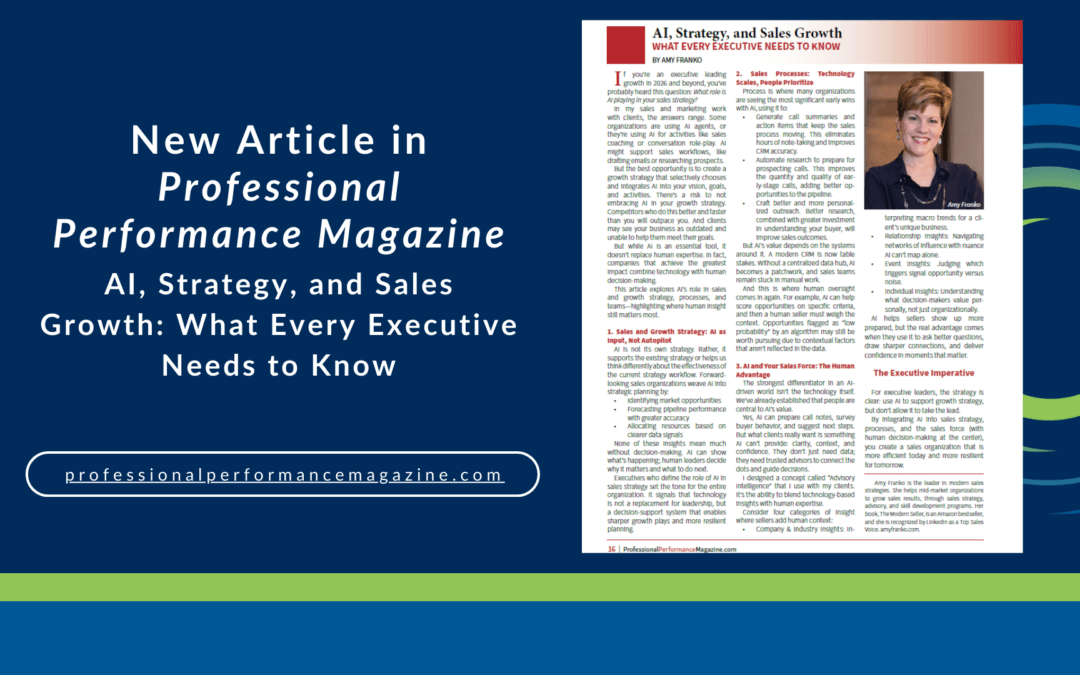
AI is shaping sales strategy for 2026, but the companies winning big aren’t putting it on autopilot. They’re treating AI as strategic input, using it to sharpen forecasts and scale workflows, while human leaders decide what matters most.
In my latest article for Professional Performance Magazine, I break down:
– Where AI accelerates sales strategy & process
– Why human insight remains the true differentiator
– And the concept of Advisory Intelligence—blending AI-driven signals with expert decision-making
The mandate for 2026 is clear: Integrate AI selectively. Lead with people. Build resilience into growth.
You can read the article here: AI, Strategy & Sales Growth: What Every Executive Needs to Know
I also encourage you to get your full copy of the issue here: https://www.professionalperformancemagazine.com/
AI doesn’t replace strategy—leadership does.
Learn how Amy Franko helps professional services firms strengthen sales strategy, elevate advisors, and accelerate growth. Schedule a call.
Frequently Asked Questions
AI should be viewed as a decision-support tool, not a standalone strategy. It can surface insights such as market opportunities, pipeline forecasts, and resource allocation signals, but human leaders must interpret those insights and decide what actions to take. The most effective organizations intentionally integrate AI into their growth strategy while keeping leadership judgment firmly in control.
AI delivers early wins by scaling efficiency across sales processes, including call summaries, CRM updates, prospect research, and personalized outreach. These capabilities reduce manual work and improve data quality. However, AI’s effectiveness depends on strong systems—like a modern CRM—and human oversight to ensure context and priorities are applied correctly.
No. AI enhances preparation and insight, but human expertise remains the key differentiator. Clients value clarity, context, and confidence—qualities that come from experienced advisors, not algorithms. The greatest impact comes from combining AI-driven insights with human judgment, relationship skills, and strategic thinking, a blend described in the article as “Advisory Intelligence.”
 Our Strategic Selling signature sales training program is now available online. This online sales learning program is ideal for professional services and B2B sales. Get started with 2 free lessons.